
Introduction: What is Lead-Antimony Alloy?
Lead-Antimony alloy is a binary alloy primarily composed of Lead (Pb) and Antimony (Sb). The chemical composition is tailored to meet specific industrial application requirements.
- Lead (Pb): Acts as the matrix metal, providing fundamental physical and chemical properties such as density and corrosion resistance.
- Antimony (Sb): Added to improve the alloy’s performance, specifically increasing hardness and mechanical strength.
A typical example found in industry is the PbSb6 alloy, which features a specific antimony content designed to enhance mechanical characteristics.
Key Mechanical Properties
Due to its unique chemical composition, Lead-Antimony alloy exhibits a series of excellent mechanical properties:
- High Strength and Hardness: The addition of antimony significantly boosts the alloy’s strength and hardness compared to pure lead.
- Good Toughness: Despite increased hardness, the alloy retains ductility, ensuring it does not fracture easily under impact.
- Low Friction Coefficient: The alloy possesses natural lubricating properties, reducing wear in bearing and gear applications.
- Corrosion Resistance: Excellent resistance to oxidation, acids, and alkalis, ensuring longevity in harsh environments.
- Conductivity: Maintains good thermal and electrical conductivity.
Primary Applications
Thanks to its versatility, Lead-Antimony alloy is widely used in various sectors:
- Lead-Acid Batteries: Ideal for battery plates/grids due to electrochemical properties and stiffness.
- Radiation Shielding: Used in X-ray rooms and industrial flaw detection due to high density.
- Chemical Equipment: Pipes, valves, and pumps handling corrosive acids.
- Bearings and Gears: Utilized for wear resistance and load-bearing capabilities.
- Soundproofing: Used as damping material in construction for sound insulation.
- Electronic Manufacturing: Cable sheathing and solder components.
Main Grades and Classifications
The alloy is categorized by the percentage of antimony content.
- Standard Grades: Typically range from PbSb2 (2% Antimony) to PbSb8 (8% Antimony).
- Common Grade: PbSb4 is widely used for general purposes.
- Special Grades: Variants like PbSb4-0.05 or PbSb6-0.5 exist, where trace elements are adjusted to optimize specific performance metrics.
Deep Dive: PbSb6 Lead-Antimony Alloy
PbSb6 is a specific industrial grade with distinct characteristics:
| Property | Details |
|---|---|
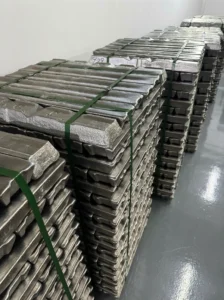
| Supply Form | Often available as forged parts or ingots. |
| Physical Density | Approx. 11.4 g/cm³ |
| Processing | Good fluidity and ease of processing; often heat-treated (annealing/solution treatment) to enhance performance. |
| Performance | Higher hardness and fatigue strength than pure lead; lower tensile strength than steel. |
Related Lead-Based Alloys
- Lead-Tin Alloy (0# to 6#): Mainly used for filling, jewelry casting, and handicrafts due to lower melting points.
- Lead-Based Bearing Alloys: Known for good “run-in” properties, suitable for casting bearings subjected to light loads and low vibration.
Standard Testing and Inspection
- Mechanical Testing: Tensile strength, compression, torsion, impact, and hardness tests (Rockwell, Brinell, Vickers).
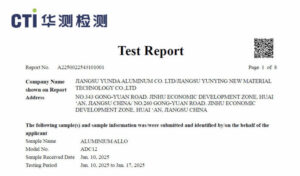
- Chemical Analysis: Precision detection of Pb, Sb, and trace elements (As, Sn, Cu).
- Metallographic Analysis: Inspection of grain size, fracture structures, and coating thickness.